Perennial plants are the backbone of any garden. They come back year after year without needing to be replanted, they get bigger and more impressive over time, and once established they largely look after themselves. For gardeners with clay soil, choosing the right perennials is particularly important — the wrong choices will sulk, rot or simply refuse to perform, while the right ones will thrive and reward you with years of reliable colour and interest.
The good news is that clay soil suits a surprisingly wide range of perennials. It holds moisture and nutrients well, stays cool in summer and provides a stable, rich rooting environment that many robust perennials genuinely prefer over lighter, free-draining soils.
This guide covers the best perennial plants for clay soil in the UK, what to look for when choosing perennials for heavy ground and how to plan for colour across every month of the year.
Get a plan matched to your clay soil, sunlight and region
Tell us about your garden in 60 seconds and we'll match plants to your clay soil, light conditions and UK region — free, no sign-up needed.
What makes a good perennial for clay soil
Not all perennials cope equally well with the challenges clay soil presents. The best perennials for clay share some common characteristics:
- Strong, vigorous root systems that can push through dense, compacted soil
- Tolerance of moisture — clay stays wetter than other soils, particularly in winter
- Robust constitution — clay soil can be slow to warm up in spring, so hardy perennials that are not in a hurry to get going do better than delicate early starters
- Drought tolerance once established — clay can also bake hard in summer, so perennials that can handle both wet winters and dry summers are ideal
The perennials in this guide meet all of these criteria. They are not just plants that will survive in clay — they are plants that will genuinely thrive in it.
The 15 best perennial plants for clay soil in the UK
1. Hardy Geranium (Geranium)
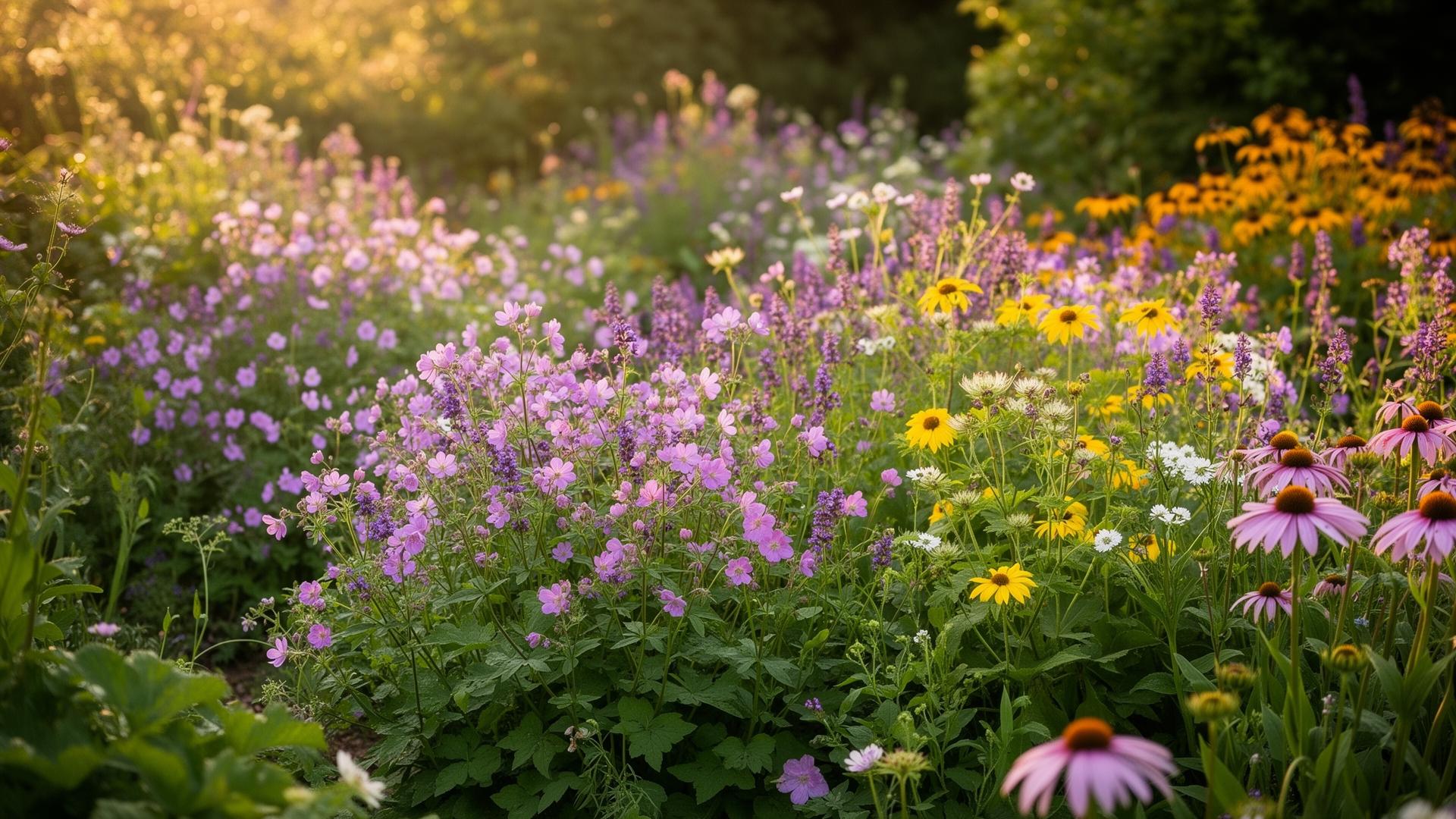
Hardy geraniums are arguably the most useful perennials you can grow in a clay soil garden. They form spreading mounds of attractive, deeply cut foliage and produce masses of flowers in shades of blue, purple, pink and white from May through to September. Many varieties continue flowering right up to the first frosts.
They tolerate clay soil extremely well, spread steadily to fill gaps and suppress weeds, and require virtually no maintenance once established. Geranium Rozanne is the outstanding variety — it flowers almost continuously from May to October and is one of the most awarded garden plants of the last twenty years.
Height: 30–60 cm | Flowers: May to October | Maintenance: Very low | Wildlife: Excellent
2. Astrantia (Astrantia major)
Astrantia is one of those plants that gardeners discover and then wonder how they ever gardened without it. The intricate, papery, pin-cushion flowers in shades of white, pink and deep burgundy appear from May to August and have a delicate, almost handmade quality that looks beautiful in the border and in a vase.
It genuinely prefers moist, humus-rich clay soil and once established spreads steadily to form impressive clumps. It is also one of the best perennials for partial shade, making it ideal for those north-facing clay borders that can be particularly difficult to plant.
Height: 60–90 cm | Flowers: May to August | Maintenance: Low | Cut flower: Excellent
3. Helenium (Helenium autumnale)
Helenium is one of the best late season perennials for clay soil and one of the most valuable plants in the garden for filling the August to October gap when many earlier flowering perennials are finishing. The daisy-like flowers in rich shades of amber, orange, red and yellow bring warmth and colour to the border at exactly the time it is needed most.
It thrives in moist, heavy soil and spreads steadily to form large clumps that get better every year. Divide it every three years in spring to keep it vigorous.
Height: 90–120 cm | Flowers: July to October | Maintenance: Low | Wildlife: Excellent for bees
4. Rudbeckia (Rudbeckia fulgida)
Rudbeckia — Black-eyed Susan — is one of the most reliable and cheerful late season perennials for clay soil. From August to October the bright golden-yellow daisy flowers with their distinctive dark centres bring a burst of sunshine to the border when the garden can start to look tired and end-of-season.
It is completely unfussy about soil conditions as long as it has reasonable moisture — which clay provides naturally — and it spreads steadily to form generous clumps without becoming invasive. Leave the seed heads standing through winter for structural interest and to feed the birds.
Height: 60–90 cm | Flowers: August to October | Maintenance: Very low | Wildlife: Excellent
5. Persicaria (Persicaria amplexicaulis)
Persicaria is one of the hardest working and most underrated perennials for clay soil. It produces slender, upright spikes of red, pink or white flowers from June right through to October — one of the longest flowering seasons of any perennial — above bold, architectural foliage that looks good from spring onwards.
It tolerates moist, heavy clay extremely well and once established is virtually indestructible. The variety Firetail with its vivid crimson red flower spikes is particularly striking and works beautifully with the warm amber tones of Helenium and Rudbeckia in late summer.
Height: 90–120 cm | Flowers: June to October | Maintenance: Very low
6. Salvia (Salvia nemorosa)
Hardy salvias are indispensable perennials for clay soil borders. The dense spikes of deep violet-blue, purple or pink flowers appear from June through to September and the aromatic, grey-green foliage is attractive throughout the growing season.
Cut them back hard after the first flush of flowers in July and they will produce a second and sometimes third wave of colour through late summer and early autumn. They are also extremely attractive to bees — few perennials bring as much pollinator activity to a border as a well-established clump of hardy salvia.
Height: 40–60 cm | Flowers: June to September | Maintenance: Low | Wildlife: Outstanding for bees
7. Echinacea (Echinacea purpurea)
Echinacea has become one of the most popular garden perennials of recent years and for very good reason. From July to September the large, daisy-like flowers with their prominent central cones appear in shades of purple, pink, white and orange, attracting butterflies and bees in impressive numbers.
It grows well in clay soil and the architectural seed heads that develop after flowering are genuinely beautiful through autumn and winter — particularly when frosted. Leave them standing until late February to provide food for goldfinches and other seed-eating birds.
Height: 60–90 cm | Flowers: July to September | Maintenance: Low | Wildlife: Exceptional
8. Crocosmia (Crocosmia)
Crocosmia is one of the most reliable and eye-catching late summer perennials for clay soil. From July to September the arching stems carry sprays of vivid orange, red or yellow trumpet flowers that bring real drama and warmth to the border at a time when bolder colour is particularly welcome.
The named varieties such as Lucifer and Emily McKenzie are well-behaved and vigorous in clay soil, spreading steadily each year to form impressive clumps. The sword-like foliage looks attractive from spring onwards, giving the border structure and movement well before the flowers appear.
Height: 60–90 cm | Flowers: July to September | Maintenance: Very low | Wildlife: Excellent
9. Japanese Anemone (Anemone × hybrida)
Japanese Anemones are among the finest late season perennials for clay soil. From August right through to October they produce elegant single flowers on tall, wiry stems in shades of pink and white — bringing fresh, clean colour to the border at exactly the time many other plants are fading.
They spread steadily in moist clay soil, forming increasingly impressive colonies over the years. Plant them at the back of a border where their height works well and they will reliably deliver late colour year after year with virtually no attention.
Height: 60–120 cm | Flowers: August to October | Maintenance: Very low
10. Achillea (Achillea millefolium)
Yarrow is one of the toughest and most versatile perennials for clay soil. From June to September the flat-topped flower heads in shades of yellow, white, pink, red and terracotta appear above feathery, aromatic foliage. The dried flower heads continue to look attractive well into autumn and the plant itself is almost completely maintenance-free.
The flat flower heads are particularly valuable for wildlife — they act as landing platforms for an enormous range of beneficial insects including hoverflies, butterflies and bees. Few perennials attract as wide a range of pollinators.
Height: 60–90 cm | Flowers: June to September | Maintenance: Very low | Wildlife: Outstanding
11. Phlox (Phlox paniculata)
Phlox is a classic British border perennial that performs particularly well in the moist, moisture-retentive conditions clay soil provides. From July to September the large, domed clusters of sweetly fragrant flowers in shades of white, pink, red, purple and lilac fill the border with colour and scent at a time when many earlier flowering perennials are finishing.
In free-draining sandy soil phlox can struggle during dry summers. In clay soil it has consistent moisture available and tends to perform much more reliably and impressively as a result.
Height: 60–120 cm | Flowers: July to September | Fragrant: Yes | Maintenance: Low
12. Hosta (Hosta)
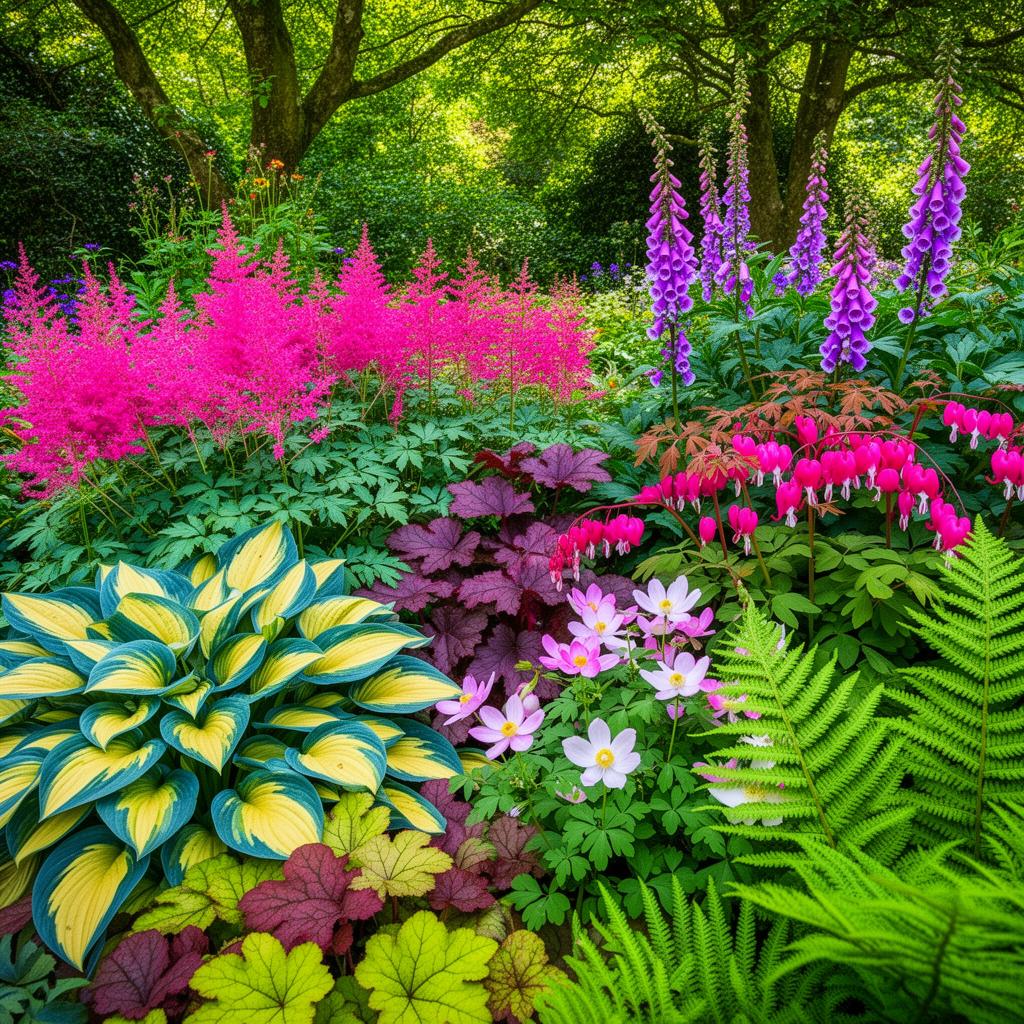
Hostas are grown primarily for their spectacular foliage — in shades of deep green, blue-green, golden yellow and variegated white — and they are completely at home in moist, heavy clay soil. The large, lush leaves look impressive from spring through autumn and in consistently moist conditions they grow larger and more dramatically than in drier soils.
They are particularly valuable for shaded clay borders where flowering plants can struggle. A well-established clump of a large-leaved hosta variety is one of the most impressive sights in a shaded garden.
Height: 30–70 cm | Interest: April to October | Maintenance: Low | Best for: Shaded clay borders
13. Heuchera (Heuchera)
Heucheras earn their place in any clay soil garden through their extraordinary year-round foliage. The leaves come in remarkable colours — deep burgundy, copper-bronze, lime green, silver and caramel — and hold their colour through winter when almost nothing else is providing visual interest in the border.
Small, delicate flower spikes appear in early summer adding a bonus flush of interest. They are evergreen, completely low maintenance and look excellent in both borders and containers. In clay soil they perform particularly well because of the consistent moisture available through summer.
Height: 30–45 cm | Interest: Year-round | Maintenance: Low | Evergreen: Yes
14. Lupin (Lupinus)
Lupins are iconic British border perennials and they grow well in clay soil as long as it is not permanently waterlogged. The tall, densely packed flower spikes in an extraordinary range of colours — from pure white through every shade of pink, red, orange, yellow, blue and purple — are one of the most recognisable and loved sights in a British garden in May and June.
They are relatively short-lived perennials, typically at their best for three to four years, but they self-seed readily. Deadhead promptly after flowering to encourage a second flush of smaller spikes later in summer and to prevent excessive self-seeding.
Height: 90–120 cm | Flowers: May to July | Maintenance: Low | Wildlife: Excellent for bees
15. Bergenia (Bergenia cordifolia)
Bergenia — commonly known as Elephant's Ears — is one of the most reliable and low maintenance evergreen perennials for clay soil. The large, glossy, rounded leaves provide bold structure and ground cover year-round and turn attractive shades of bronze and red in winter. In March and April clusters of bright pink or white flowers appear on short stems — one of the earliest perennial flowers of the year.
It tolerates clay soil, shade and neglect with equal good humour. Plant it at the front of a border where its low, spreading habit and bold foliage work well as an edging plant.
Height: 30–40 cm | Flowers: March to April | Maintenance: Very low | Evergreen: Yes | Winter interest: Excellent
Month by month perennial colour in clay soil
| Month | What to enjoy |
|---|---|
| January | Heuchera foliage — Bergenia leaves turning bronze-red |
| February | Bergenia foliage — Hosta crowns beginning to emerge |
| March | Bergenia in full flower — Hardy Geranium foliage appearing |
| April | Bergenia continuing — Hosta leaves unfurling — Lupin foliage bold |
| May | Lupins flowering — Hardy Geraniums beginning — Astrantia opening |
| June | Hardy Geraniums full — Astrantia continuing — Salvia beginning — Achillea flowering |
| July | Phlox beginning — Crocosmia starting — Helenium opening — Persicaria flowering |
| August | Phlox at peak — Helenium full — Rudbeckia beginning — Japanese Anemone starting |
| September | Rudbeckia at peak — Japanese Anemone continuing — Echinacea seed heads forming |
| October | Japanese Anemone finishing — Persicaria last flowers — seed heads appearing |
| November | Heuchera foliage bold — Echinacea and Rudbeckia seed heads structural |
| December | Evergreen Heuchera and Bergenia holding colour — seed heads in frost |
How to plant perennials successfully in clay soil
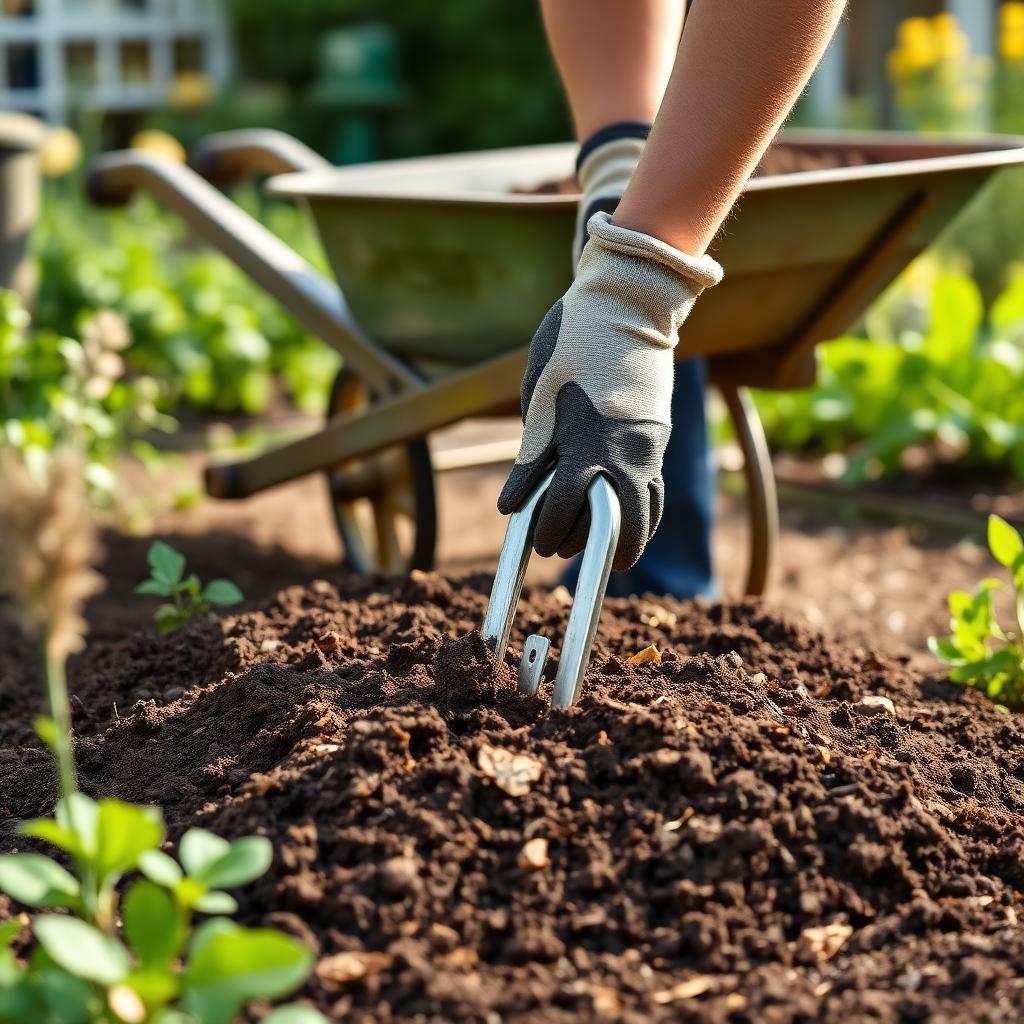
Prepare the planting hole generously. Dig a hole at least twice the width of the root ball and mix a generous amount of well-rotted compost or garden compost into the excavated soil before backfilling. This gives the roots a good start and improves drainage immediately around the plant.
Plant in autumn or spring. Autumn planting allows perennials to establish roots through winter before the demands of spring growth. Spring planting works well but needs more attention to watering in the first summer. Avoid planting in summer when clay can bake hard.
Do not plant too deep. The crown of the plant — where the stems meet the roots — should sit at or just below soil level. Planting too deep in clay can cause the crown to rot in wet conditions.
Mulch generously every autumn. A thick layer of well-rotted compost or bark mulch spread across the border each autumn gradually improves clay soil structure over the years and helps regulate moisture levels through summer.
Be patient. Perennials follow the old gardening saying perfectly — they sleep in their first year, creep in their second and leap in their third. Clay soil perennials planted this autumn will look modest next year and spectacular the year after.