Clay soil with poor drainage is one of the most common gardening challenges in the UK. If your garden becomes waterlogged after heavy rain, if puddles sit for hours or days after a downpour, or if your soil feels heavy and sticky when wet and rock hard when dry — you have clay soil with drainage problems.
The good news is that this is not a disaster. It is simply a set of conditions. And once you know which plants genuinely thrive in wet, heavy clay, you can create a beautiful, productive garden that works with your soil rather than against it.
This guide covers the best plants for clay soil with poor drainage in the UK, how to identify whether drainage is your problem, and how to improve your soil over time.
Get a plan matched to your clay soil, sunlight and region
Tell us about your garden in 60 seconds and we'll match plants to your clay soil, light conditions and UK region — free, no sign-up needed.
How to know if you have poor drainage
Before choosing plants, it helps to understand exactly what you are dealing with. Clay soil with poor drainage shows these signs:
- Puddles form on the surface after rain and take more than an hour to disappear
- The soil feels waterlogged and squelchy underfoot in winter
- Plant roots rot over winter even in supposedly hardy plants
- The surface cracks in summer when it dries out
- Digging reveals a grey or bluish tinge to the soil beneath the surface — a sign of waterlogging
If you recognise two or more of these, your soil has genuine drainage issues and your plant choices need to reflect that.
Why most plants fail in waterlogged clay
The problem with waterlogged soil is not simply that it is wet. It is that waterlogged soil is low in oxygen. Plant roots need oxygen to function and when soil is permanently saturated, roots suffocate and rot. This is why plants that would otherwise cope with clay soil can still fail when drainage is very poor.
The plants in this guide have adapted to cope with exactly these conditions. They either tolerate wet roots, actively prefer moist soil, or have root systems that can handle periods of waterlogging without deteriorating.
The 14 best plants for clay soil with poor drainage in the UK
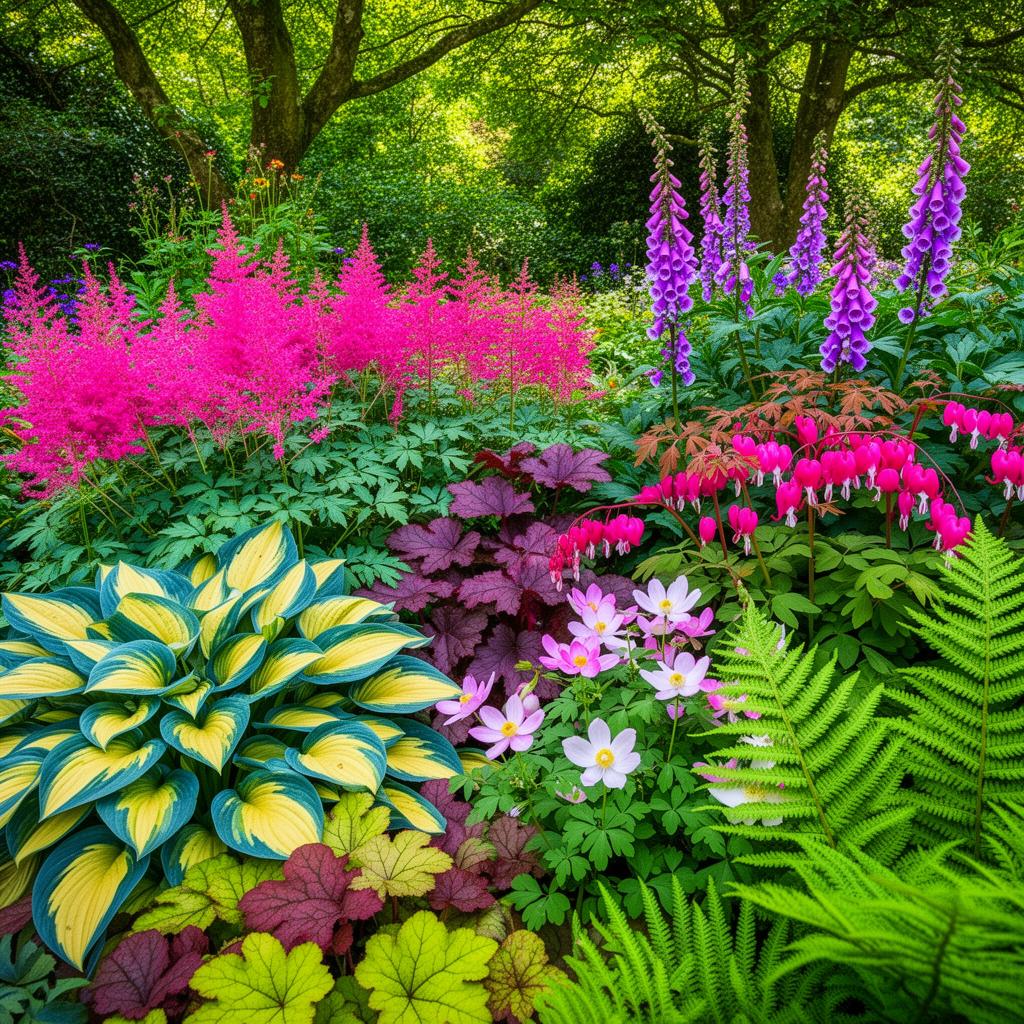
1. Astilbe (Astilbe)
Astilbe is one of the finest plants you can grow in wet clay soil. It actively thrives in moist, poorly drained conditions that would kill most other perennials. In June and July it produces feathery, plume-like flowers in shades of red, pink, white and purple, followed by attractive seed heads that persist into autumn and winter.
It grows happily in partial shade as well as full sun — making it ideal for those north-facing, waterlogged corners that are difficult to plant.
Height: 60–90 cm | Flowers: June to August | Maintenance: Very low | Wildlife: Good for bees
2. Marsh Marigold (Caltha palustris)
The Marsh Marigold is a native British wildflower that has evolved specifically for wet, poorly drained ground. It produces cheerful, bright yellow flowers in March and April — one of the earliest flowering plants of the year — and its glossy, dark green foliage looks attractive before and after flowering.
It will even grow at the edge of a pond or in boggy ground that is permanently wet. If you have a particularly waterlogged corner that nothing else will tolerate, Marsh Marigold is your answer.
Height: 30–40 cm | Flowers: March to April | Maintenance: Very low | Native: Yes
3. Ligularia (Ligularia dentata)
Ligularia is a bold, architectural plant that loves moist, heavy soil. The large, rounded leaves are dramatic and impressive — some varieties have deep purple-bronze undersides — and in July and August it produces tall spikes or clusters of bright orange-yellow daisy flowers.
It will wilt dramatically in dry conditions but in wet clay soil it is completely in its element. Position it where it gets some shade from afternoon sun and it will reward you with spectacular foliage from spring through autumn.
Height: 90–120 cm | Flowers: July to August | Maintenance: Low
4. Loosestrife (Lythrum salicaria)
Purple Loosestrife is a tall, elegant perennial that is perfectly adapted to wet, poorly drained conditions. From July to September it produces long spikes of vivid magenta-purple flowers that are incredibly attractive to bees and butterflies. It is one of the best wildlife plants you can grow in a wet garden.
It is vigorous and spreads steadily in conditions it likes — which in a poorly drained clay border is exactly what you want, as it fills the space confidently and suppresses weeds.
Height: 90–120 cm | Flowers: July to September | Maintenance: Low | Wildlife: Exceptional
5. Gunnera (Gunnera manicata)
If you have a large garden with a particularly wet, boggy area, Gunnera is one of the most dramatic plants in British horticulture. The enormous leaves — which can reach two metres across in good conditions — create a prehistoric, jungle-like atmosphere that is genuinely spectacular.
It needs space and it needs moisture. In wet clay soil with poor drainage it can become a genuine statement plant that visitors will ask about every single time.
Height: 2–3 metres | Interest: April to October | Maintenance: Low | Best for: Large gardens only
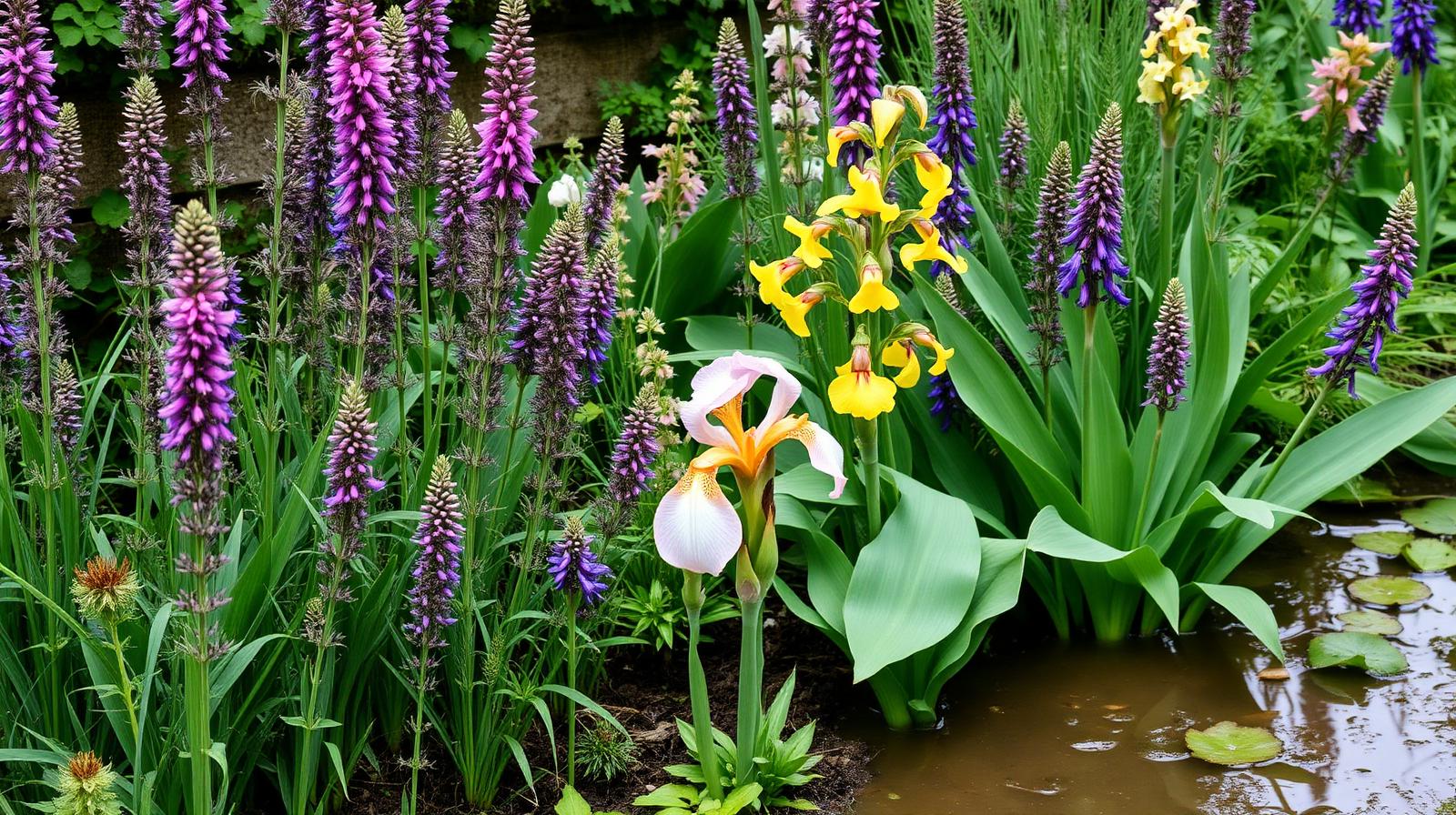
6. Iris (Iris sibirica and Iris pseudacorus)
Two iris species are particularly well suited to wet clay conditions. Siberian Iris produces elegant, delicate flowers in shades of blue, purple and white in May and June and tolerates consistently moist soil extremely well. Yellow Flag Iris is a native British species that grows naturally at the edges of ponds and rivers — it will cope with ground that is permanently wet.
Both produce attractive, upright, grass-like foliage that looks good throughout the growing season even when not in flower.
Height: 60–90 cm | Flowers: May to July | Maintenance: Low | Wildlife: Excellent
7. Rodgersia (Rodgersia pinnata)
Rodgersia is one of the most underused plants for wet, shaded gardens. The large, deeply veined leaves are architectural and bold — reminiscent of a horse chestnut leaf — and in June and July it produces tall plumes of small pink or white flowers above the foliage.
It thrives in moist, humus-rich clay soil and partial shade, making it perfect for the kind of damp, shadier borders that are particularly difficult to plant successfully.
Height: 90–120 cm | Flowers: June to July | Maintenance: Low
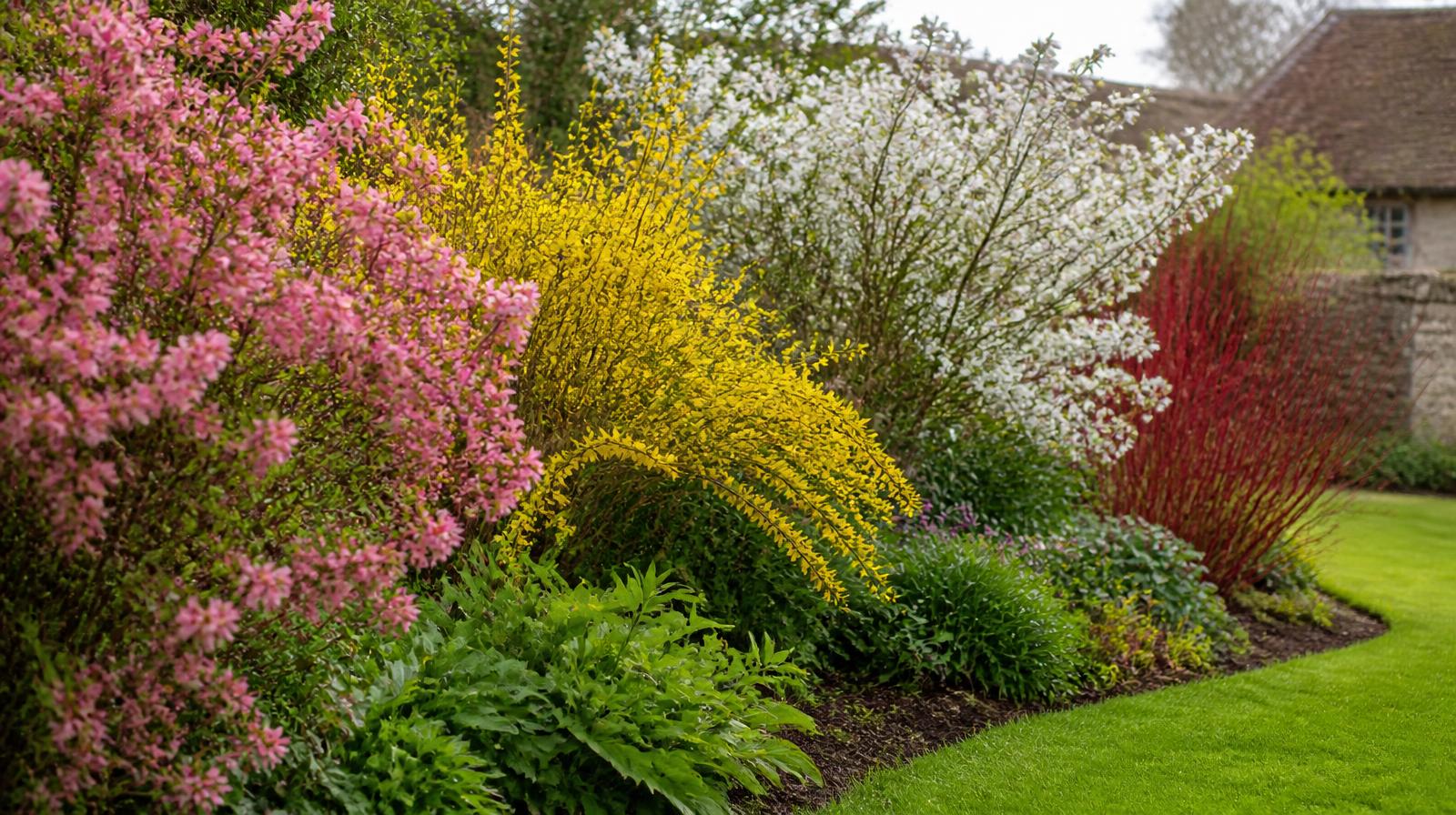
8. Dogwood (Cornus alba)
Dogwood is one of the best shrubs for wet, heavy clay soil. It tolerates waterlogging that would kill most other shrubs and in return it delivers something remarkable in winter — vivid red, orange or yellow stems that glow when everything else in the garden is bare and grey.
Cut the stems hard back in early spring to encourage the brightest new growth for the following winter. Within a few years you will have a large, colourful shrub that looks spectacular from November through to March.
Height: 2–3 metres | Winter interest: November to March | Maintenance: Low | Evergreen: No
9. Meadowsweet (Filipendula ulmaria)
Meadowsweet is a native British wildflower that grows naturally in wet meadows, riverbanks and poorly drained ground. From June to August it produces frothy clusters of creamy white, intensely fragrant flowers on tall stems above deeply cut foliage.
It is completely at home in waterlogged clay and requires virtually no maintenance once established. It also attracts an impressive range of beneficial insects — making it an excellent choice for a wildlife-friendly wet garden.
Height: 60–120 cm | Flowers: June to August | Maintenance: Very low | Native: Yes | Fragrant: Yes
10. Hosta (Hosta)
Hostas are most commonly associated with shade gardens but they are equally at home in moist, heavy clay soil. Their large, lush leaves look spectacular from spring through autumn and in consistently moist conditions they grow larger and more impressively than in drier soil.
The key advantage of hostas in a wet clay garden is that consistently moist soil actually reduces slug damage — slugs prefer to travel across dry surfaces. Choose larger leaved varieties for the most dramatic effect.
Height: 30–70 cm | Interest: April to October | Maintenance: Low
11. Persicaria (Persicaria amplexicaulis)
Persicaria is one of the hardest working perennials you can grow in a wet clay garden. It flowers for an extraordinarily long season — from June right through to October — producing slender, upright spikes of red, pink or white flowers above large, bold foliage.
It tolerates moist, heavy soil extremely well and once established it is virtually indestructible. The long flowering season makes it particularly valuable for filling the late summer and autumn gap when many other plants are finishing.
Height: 90–120 cm | Flowers: June to October | Maintenance: Very low
12. Elder (Sambucus nigra)
Elder is a fast-growing native shrub that thrives in wet, poorly drained clay soil. The ornamental varieties — particularly those with deeply cut purple-black foliage — are genuinely beautiful garden plants as well as being wildlife powerhouses. In June the flat-topped clusters of creamy white flowers appear, followed by dark berries in autumn that birds absolutely love.
Choose Sambucus nigra Black Lace or Black Beauty for the most ornamental effect. Cut back hard every spring to keep it compact and encourage the best foliage colour.
Height: 2–4 metres | Flowers: June | Berries: September | Wildlife: Exceptional | Native: Yes
13. Trollius (Trollius europaeus)
Trollius — commonly known as Globe Flower — is a beautiful early-flowering perennial for moist, heavy clay. It produces perfectly rounded, globe-shaped flowers in shades of rich yellow and orange in May and June and looks particularly effective planted in groups at the edge of a border where the soil tends to stay wettest.
It is a native British wildflower and extremely hardy — completely unfazed by the wet winters that damage so many other plants.
Height: 60–90 cm | Flowers: May to June | Maintenance: Low | Native: Yes
14. Willow (Salix)
For larger gardens with serious drainage problems, an ornamental willow is worth considering. Willows are among the thirstiest plants in existence — they actively draw water out of the ground and can help improve drainage in chronically waterlogged areas over several years.
Smaller ornamental varieties such as Salix integra Hakuro Nishiki — with its striking pink and white variegated foliage — are suitable for average sized gardens and bring genuine ornamental value as well as practical drainage benefits.
Height: 1.5–3 metres depending on variety | Interest: Year-round | Maintenance: Low
Month by month colour in a wet clay garden
| Month | What to enjoy |
|---|---|
| January | Dogwood stems glowing red and orange |
| February | Dogwood continuing — Marsh Marigold foliage emerging |
| March | Marsh Marigold in full flower |
| April | Marsh Marigold continuing — Hostas emerging — Trollius budding |
| May | Trollius flowering — Iris beginning — Elder foliage at its best |
| June | Iris at peak — Astilbe beginning — Meadowsweet flowering — Elder flowers |
| July | Astilbe full — Ligularia flowering — Loosestrife beginning — Rodgersia flowering |
| August | Loosestrife at peak — Persicaria beginning — Ligularia continuing |
| September | Persicaria continuing — Elder berries — Hosta foliage turning golden |
| October | Persicaria finishing — Dogwood stems beginning to colour |
| November | Dogwood stems vivid — structural interest from Gunnera skeletons |
| December | Dogwood at its most colourful — evergreen structure holding |
How to improve clay soil drainage over time
Choosing the right plants is the immediate solution. But improving your soil over time will gradually open up more planting options.
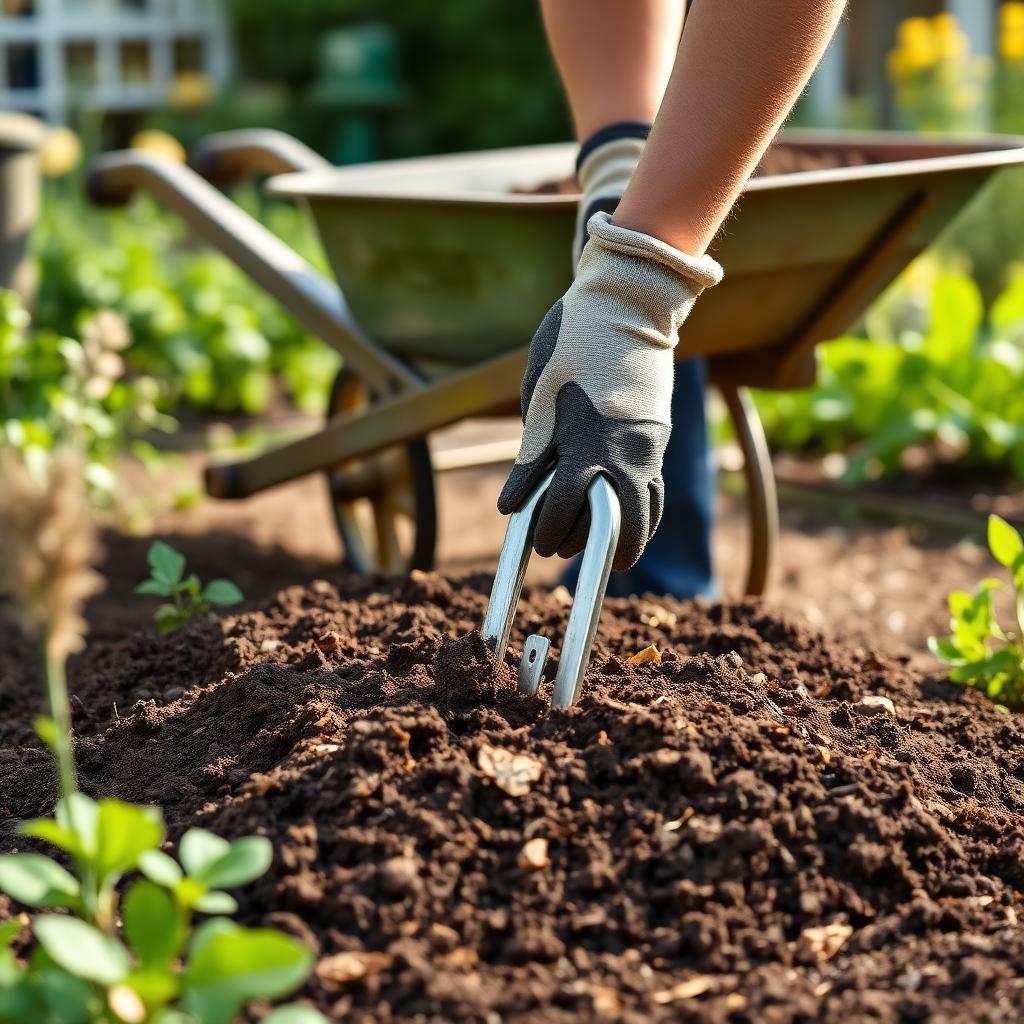
Add organic matter every year
Dig in well-rotted compost, leaf mould or composted bark in autumn. Over several years this improves the structure of clay soil, creating larger air pockets and better drainage.
Never dig clay soil when wet
Working wet clay compacts it further and makes drainage worse. Wait until it has dried slightly before digging or planting.
Raise your borders
Even raising a border by 15 to 20 centimetres with good quality topsoil mixed with compost dramatically improves drainage for the plants growing in it.
Consider a French drain
If one area of your garden is permanently waterlogged, a simple French drain — a trench filled with gravel — can redirect water away from planting areas. This is a job for a garden contractor but the results can be transformative.
Plant a willow or elder
As noted above, thirsty trees and shrubs actively draw water from the soil and can measurably improve drainage in waterlogged areas over a few growing seasons.